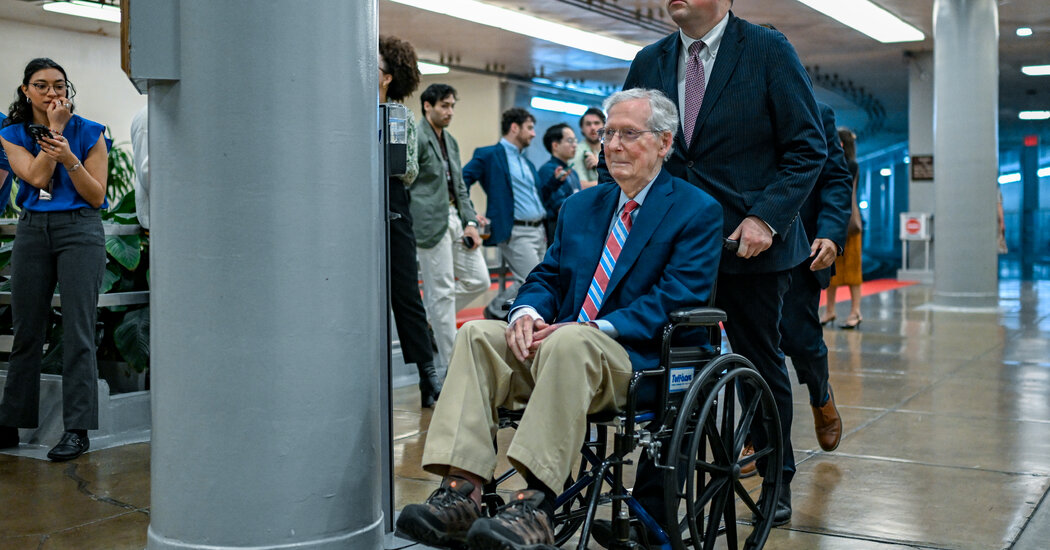
The question of when a political leader should step aside has become one of the most contentious debates in modern American governance. At the center of this storm is Senator Mitch McConnell of Kentucky. As a veteran of the upper chamber, McConnell has navigated decades of partisan warfare, but his recent health challenges have brought a new level of scrutiny to his continued tenure. Unlike previous eras where a senator’s declining health might be handled with quiet discretion, the current political climate has transformed a personal medical matter into a high-stakes public standoff.
What happened
In recent months, Senator McConnell has faced an increasing number of calls to resign from his position in the Senate. This pressure has largely emanated from Democratic rivals, but it has also been amplified by a vocal segment of the public on social media. The demands follow a series of health-related incidents that have led to extended absences from the Senate floor. At 84 years old, the Minority Leader’s physical stamina and ability to perform his duties have become central topics of discussion in Washington.
The push for his resignation is not merely about his ability to vote; it is also a demand for greater transparency. Critics argue that the public and his constituents deserve a clearer understanding of his medical standing and how it impacts his legislative responsibilities. While McConnell has returned to work and remains active in Republican strategy, the “social media storm” mentioned by observers has ensured that every public appearance is analyzed for signs of frailty, creating a narrative of vulnerability that the Senator has fought to overcome.
Context
McConnell’s situation is not unprecedented in the history of the United States Senate. For much of the 20th century, it was relatively common for senators to remain in office while dealing with significant health issues or advanced age. In many cases, these individuals were sidelined for much longer periods than McConnell has been, yet they rarely faced organized calls for their resignation. The Senate was often viewed as a “deliberative body” where seniority was sacred and peers protected one another’s privacy.
However, the political landscape has shifted dramatically. We are now in an era characterized by a 24-hour news cycle and razor-thin voting margins. Every seat in the Senate carries immense weight for judicial appointments, budget reconciliations, and legislative agendas. Furthermore, the rise of digital media has removed the veil of privacy that once shielded aging politicians. Today, a single moment of hesitation on camera can go viral instantly, fueling demands for change that previous generations of leaders never had to navigate.
Why it matters
The persistence of Mitch McConnell in the Senate is significant for several reasons. First, it highlights the ongoing debate regarding “gerontocracy” in American politics. With many of the nation’s top leaders serving well into their 80s, there is a growing conversation about whether the current system allows for a timely infusion of new leadership and perspectives. McConnell’s refusal to step down serves as a test case for how long a party leader can maintain power in the face of physical decline.
Second, the situation underscores the strategic importance of the Kentucky Senate seat. Under current laws and political alignments, a vacancy would trigger a specific replacement process that could impact the balance of power in the chamber. For the Republican Party, McConnell represents a steady hand and a master of parliamentary procedure. Replacing him is not just about filling a seat; it is about finding someone who can replicate his influence and fundraising prowess.
Finally, the scrutiny on McConnell reflects a broader demand for transparency in government. As voters become more skeptical of institutional power, the expectation that leaders be fully accountable for their fitness for office has intensified. Whether McConnell chooses to serve out his term or eventually bows to the pressure, his current struggle marks a turning point in how the American public views the intersection of health, age, and political authority.